
- Notes: The spectroscopic data below are for the isotope 4 He. He I Ground State 1s 2 1 S 0 Ionization energy 198310.669 cm-1 (24.587387 eV) Ref. M02 He II Ground State 1s 2 S 1 / 2.
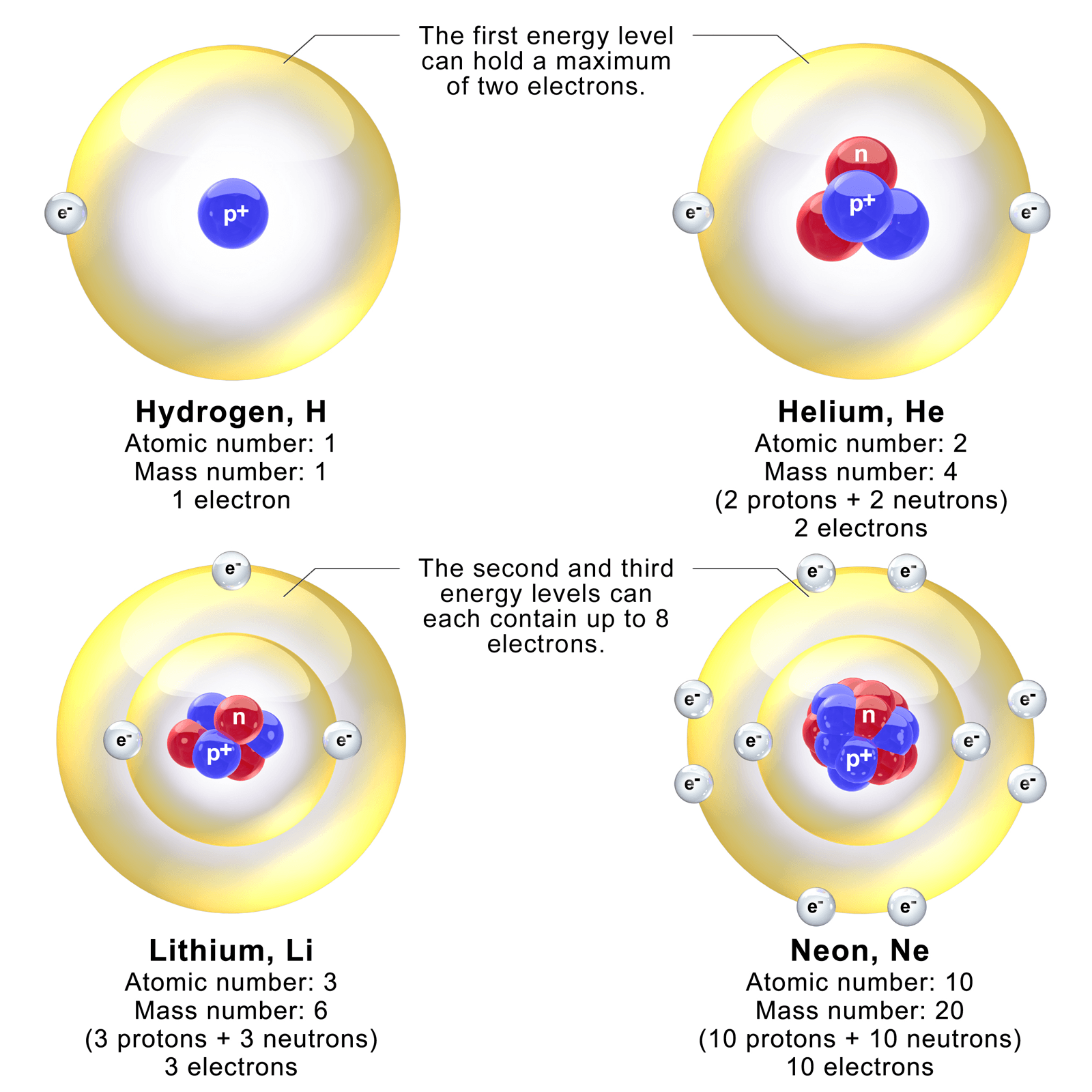
- Hydrogen is a chemical element with atomic number 1 which means there are 1 protons and 1 electrons in the atomic structure. The chemical symbol for Hydrogen is H. With a standard atomic weight of circa 1.008, hydrogen is the lightest element on the periodic table. Its monatomic form (H) is the most abundant chemical substance in the Universe, constituting roughly 75% of all baryonic mass.
Helium Mass Number 3
Chemical, Physical and Thermal Properties of Helium - He
Chemical, physical and thermal properties of Helium - He :
(values at 25oC (77oF, 298 K) and atmospheric pressure)

The two gases have comparable mass (H 2 and He). Single helium atoms are so small they pass between many other molecules. This is why a filled helium balloon deflates over time - the helium escapes through tiny pores in the material. Atomic number 2 is the second most abundant element in the universe, after hydrogen.
| Molecular Weight | 4.0026 |
| Specific Gravity, air = 1 | 0.138 |
| Specific Volume (ft3/lb, m3/kg) | 97.86, 6.11 |
| Density of liquid at atmospheric pressure (lb/ft3, kg/m3) | 7.80, 125 |
| Absolute Viscosity (lbm/ft s, centipoises) | 13.4 10-6, 0.02 |
| Sound velocity in gas (m/s) | 1015 |
| Specific Heat - cp - (Btu/lboF or cal/goC, J/kgK) | 1.24, 5188 |
| Specific Heat Ratio - cp/cv | 1.66 |
| Gas constant - R - (ft lb/lboR, J/kgoC) | 386, 2077 |
| Thermal Conductivity (Btu/hr ft oF, W/moC) | 0.086, 0.149 |
| Boiling Point - saturation pressure 14.7 psia and 760 mm Hg - (oF, oK) | -452, 4.22 |
| Latent Heat of Evaporation at boiling point (Btu/lb, J/kg) | 10.0, 23300 |
| Critical Temperature (oF, oK) | -450.3, 5.2 |
| Critical Pressure (psia, MN/m2) | 33.22, - |
| Critical Volume (ft3/lb, m3/kg) | 0.231, 0.0144 |
| Flammable | no |
Follow the links below to get values for the listed properties of helium at varying pressure and temperature:
See also more about atmospheric pressure, and STP - Standard Temperature and Pressure & NTP - Normal Temperature and Pressure,
as well as Thermophysical properties of: Acetone, Acetylene, Air, Ammonia, Argon, Benzene, Butane, Carbon dioxide, Carbon monoxide, Ethane, Ethanol, Ethylene, Hydrogen, Hydrogen sulfide, Methane, Methanol, Nitrogen, Oxygen, Pentane, Propane, Toluene, Water and Heavy water, D2O.

Related Topics
Helium Mass Number
- Material Properties - Material properties for gases, fluids and solids - densities, specific heats, viscosities and more
Related Documents
Helium Mass Number Rounded

Helium Mass Number And Atomic Number
- Acetone - Thermophysical Properties - Chemical, physical and thermal properties of acetone, also called 2-propanone, dimethyl ketone and pyroacetic acid. Phase diagram included.
- Air - Thermophysical Properties - Thermal properties of air - density, viscosity, critical temperature and pressure, triple point, enthalpi and entropi, thermal conductivity and diffusicity, and more
- Benzene - Thermophysical properties - Chemical, physical and thermal properties of benzene, also called benzol. Phase diagram included.
- Carbon Dioxide Properties - Properties of saturated liquid Carbon Dioxide - CO2 - density, specific heat, kinematic viscosity, thermal conductivity and Prandtl number
- Critical Points for some Substances - Critical points of some common substances like air, argon, helium and more
- Critical Temperatures and Pressures for some Common Substances - Critical temperatures and pressures for some common substances - air, alcohol, ether, oxygen and more
- Cryogenic Fluids - or Liquefied Gas Properties - Cryogenic properties as density, boiling points and heat of evaporation for fluids like hydrogen, methane, oxygen, nitrogen, fluorine and helium
- Ethane - Thermophysical Properties - Chemical, Physical and Thermal Properties of Ethane - C2H6
- Ethylene - Thermophysical Properties - Chemical, physical and thermal properties of ethylene, also called ethene, acetene and olefiant gas. Phase diagram included.
- Gas Mixture Properties - Special care must be taken for gas mixtures when using the ideal gas law, calculating the mass, the individual gas constant or the density
- Gases - Densities - Densities and molecular weights of some common gases - acetylene, air, methane, nitrogen, oxygen and others ..
- Helium - Density and Specific Weight - Online calculator, figures and tables showing density and specific weight of helium, He, at varying temperature and pressure - Imperial and SI Units
- Hydrogen - Thermophysical Properties - Chemical, Physical and Thermal Properties of Hydrogen - H2
- Ideal Gas Law - The relations between volume, pressure, temperature and quantity of a gas, including definition of density of a gas
- Moist Air Properties - Psychrometric table with humid air properties
- Nitrogen - Enthalpy, Internal Energy and Entropy - Enthalpy, internal energy and entropy of Nitrogen as ideal gas
- Non-ideal gas - Van der Waal's Equation and Constants - Listing of van der Waals constants for more than 200 gases, used to correct for non-ideal behavior of gases caused by intermolecular forces and the volume occupied by the gas particles
- Oxygen - Enthalpy, Internal Energy and Entropy - Enthalpy, internal energy and entropy of oxygen as ideal gas
- Pentane - Thermophysical Properties - Chemical, physical and thermal properties of pentane, also called n-pentane. Phase diagram included.
- Solubility of Gases in Water - Solubility of Ammonia, Argon, Carbon Dioxide, Carbon Monoxide, Chlorine, Ethane, Ethylene, Helium, Hydrogen, Hydrogen Sulfide, Methane, Nitrogen, Oxygen and Sulfur Dioxide in water