
The commentary on Dogen's text is by Kosho Uchiyama Roshi (1912-1998). Uchiyama Roshi was a senior disciple of the great Kodo Sawaki Roshi (1880-1965). In addition to being a Soto Zen priest he was also an origami master, the abbot of Antaiji Monastery, near Kyoto and the author of more than 20 books. Rosa parksalamo world geography. How to Cook Your Life: From the Zen Kitchen to Enlightenment. By Eihei Dogen and Kosho Uchiyama Roshi Nov 8, 2005. 4.8 out of 5 stars. Together with his student, Uchiyama Kosho Roshi, he transformed Antaiji from a place for the intellectual study of Buddhist texts like the the Shobogenzo, into a place for Zen practice based on pure Zazen. Kosho Uchiyama: ORU Magazine 5 (read full review) 141: Square: Car Vehicles - Cars: Kosho Uchiyama: Origami Text in 4 Languages. 21: Square: Car Vehicles - Cars: Kosho Uchiyama: Der Falter 27: 60: Square: Folded by Gilad Aharoni: Car Vehicles - Cars: Kosho Uchiyama: Folding for All 2: 3: Square: Folded by Gilad Aharoni: Car Vehicles - Cars.
Kosho Uchiyama was the head Zen priest at one of the great zen temples in Kyoto and led meditation there. He was a student of the great zen master Kodo Sawaki. What he does in this book is to explain that it is important to practice zazen in order to understand it.
Livros De Kosho Uchiyama
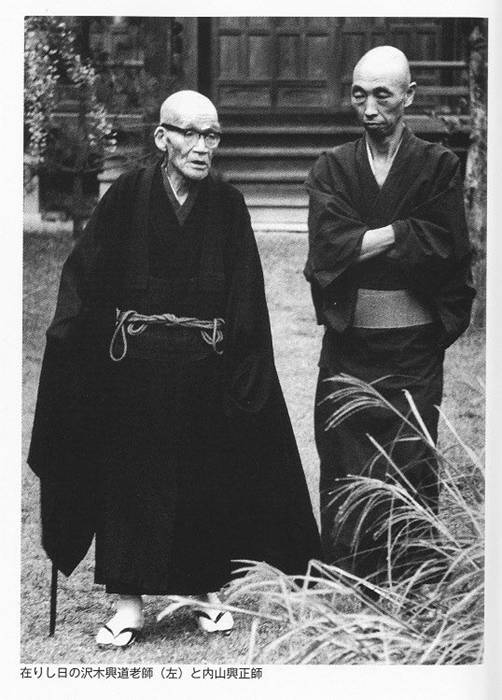
Sawaki & Uchiyama
Kosho Uchiyama
Two former abbots of Antaiji
Kosho Uchiyama Books
Sawaki Kodo became abbot of Antaiji in 1949, when the temple was still located in northern Kyoto. Sawaki Roshi was the Zen master who brought the degenerated Zen of the 20th century back to its roots: The practice of Zazen without the expectation of gain. Together with his student, Uchiyama Kosho Roshi, he transformed Antaiji from a place for the intellectual study of Buddhist texts like the the Shobogenzo, into a place for Zen practice based on pure Zazen. Uchiyama Roshi, who ordained with Sawaki Roshi in 1941, took care of Antaiji, while Sawaki Roshi travelled all over Japan to conduct sesshin (intensive weeks of Zazen) in many places of the country. Each month, of course, one of these sesshin took place in Antaiji as well. In 1962 Sawaki finally settled down in Antaiji because he had gotten weak in his legs. At Antaiji, Uchiyama took care of him until his death in December 1965. Instead of the customary large-scale funeral services, Uchiyama Roshi decided after Sawaki Roshi’s death to conduct a memorial sesshin for him – 49 days long. Thus he emphasized Sawaki’s stress of Zazen, which can never be replaced by rituals and services. The 49 day sesshin also became the start of the new “Antaiji style” sesshin: Sesshin without toys – no dharma lectures, no sutra reading, no talking, no kyosaku, no samu.
After Sawaki’s death many students started to gather around Uchiyama at Antaiji, who became known throughout Japan and all over the world through his many books. One of those was “Yadonashi Hokkusan” (“The Dharma of Homeless Kodo”), published in 1972 – a collection of Dharma words by Sawaki Kodo with commentaries by Uchiyama Kosho. This book was translated by Ichida Koshi into English and published together with “On Sawaki Kodo Roshi’s Zazen” (translated by Okumura Shohaku) as “The Zen Teaching of ‘Homeless’ Kodo” (available through the Soto Zen Headquarters in Tokyo or through Zen centers in your area). “The Zen teaching of ‘Homeless’ Kodo” contains 64 out of the 71 chapters of the Japanese original “Yadonashi Hokkusan”. You can find a translation of 31 chapters, including the 7 chapters which are not part of the printed version, here.
Master Roshi Laugh
We have also translated “To you”, a collection of sayings by Sawaki Roshi, collected by Uchiyama Roshi and edited by his disciple Kushiya Shusoku Roshi.
Shoryu Bradley
Kosho Uchiyama Roshi
Shoryu Bradley was ordained as a Soto Zen priest in 2002 by Seirin Barbara Kohn at Austin Zen Center. In 2004 he moved to Bloomington, IN to study with Shohaku Okumura Roshi and Sanshin Zen Community. He also trained at Tassajara Zen Mountain Center, studying with teachers such as Tenshin Reb Anderson Roshi, Jiko Linda Cutts, Setsuan Gaelyn Godwin, Zenkei Blanche Hartman Roshi, Myo Denis Lahey, and Kosho McCall. During Sotoshu International Training Monastery angos held in the US and Japan, he studied with Gengo Akiba Roshi and Hokan Saito Roshi. In 2010 Shoryu received dharma transmission from Okumura Roshi. He holds a B.S. in psychology from Texas A&M University, an M.Ed. in Rehabilitation Counseling from the University of Texas at Austin, and he has lived and practiced at Gyobutsuji since founding it in December 2011.
Shohaku Okumura Roshi
Shohaku Okumura Roshi, Shoryu Bradley’s teacher, was born in Osaka, Japan in 1948. He studied Zen Buddhism at Komazawa University in Tokyo and was ordained by Kosho Uchiyama Roshi in 1970. They practiced together until 1975, when Okumura Roshi came to the United States. After practicing at the Pioneer Valley Zendo in Massachusetts until 1981, he returned to Japan, where he began translating Dogen Zenji’s and Uchiyama Roshi’s writings into English. Okumura Rroshi was a teacher at the Kyoto Soto Zen Center and later at the Minnesota Zen Meditation Center in Minneapolis, Minnesota. In 1996 he founded Sanshin Zen Community in Bloomington, Indiana where he currently practices and lives with his family.
Kosho Uchiyama Quotes
Kosho Uchiyama Roshi
Kosho Uchiyama Roshi, Shohaku Okumura’s teacher, was one of the most highly respected modern Japanese Zen Masters. He was born in Tokyo, Japan in 1912. In 1937 he received a Master’s Degree in Western philosophy from Waseda University, and in 1941 he was ordained as a Soto Zen priest by Kodo Sawaki Roshi. Upon Sawaki-roshi’s death in 1965, Uchiyama-roshi became the abbot of Antai-ji, a monastery and temple then located in Kyoto, Japan. In 1975, he retired from Antai-ji and lived with his wife at Noke-in, a small temple outside Kyoto, until his death on March 13, 1998. Contact us!roblox pastebin get free scripts!. During his lifetime, Uchiyama Roshi was a prolific writer, publishing 19 books including Opening the Hand of Thought: Foundations of Zen Buddhist Practice.
Kosho Uchiyama Approach To Zen
Kodo Sawaki Roshi
Kodo Sawaki Roshi, Uchiyama-roshi’s teacher, was described as being “like an ancient Zen master: fearless and unconventional.” By age 7, both his parents and the uncle who had later adopted him had died, and he was adopted by a professional gambler. At age 16 he went to Eihei-ji with aspirations of becoming a monk. The following year he was ordained by Koho Sawada, abbot of Soshin-ji, and given the name, “Kodo”. In 1923 he began travelling around Japan, giving lectures and leading sesshins (retreats). He became a professor of Zen literature at Komazawa University in 1935 and taught there until 1963. He established Antai-ji Shichikurin Sanzen Dojo in 1949 and died there in 1965.